
“I don’t wanna be working in ballet or opera or things where it’s like, ‘hey, keep this thing alive’ even though nobody cares about it anymore” – Timothee Chalamet’s famous last words that didn’t cost him “14 cents in viewership”, but arguably an entire Oscar. The crítical flaw in this statement is not deeming these arts as dying, but making the bold claim that “nobody cares” about them anymore. This is not true, and never has been.
Understandably, people perceive performing arts as fading away. Attendance numbers fluctuate, major productions struggle financially, and art programs are most commonly underfunded. But what that doesn’t translate to is a lack of appreciation and admirers, more-so a growing rate of inaccessibility.
What Chalamet failed to include in his arrogant list of what “nobody cares” about anymore was theatre. The common misconception of theatre, along with most other performing arts, is that when they’re labeled as “dying”, that’s believed to imply wilting desirability. When, in reality, it’s just a matter of lessening accessibility.
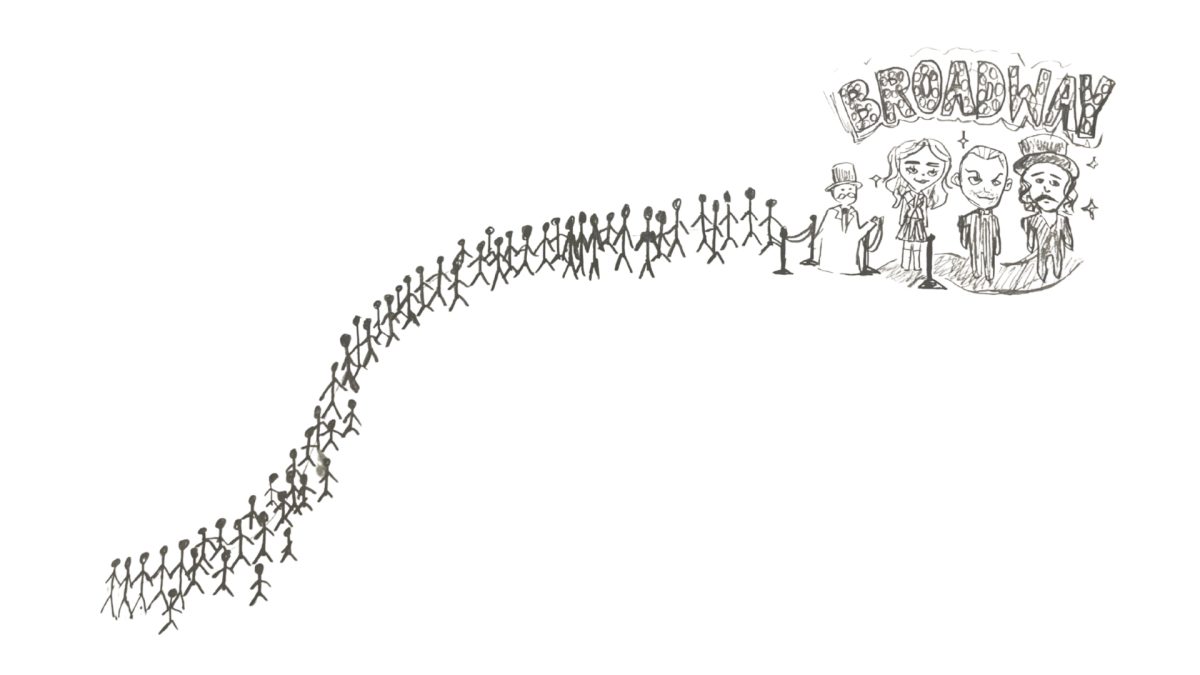
Show ticket prices, along with that of any movie ticket or water bill, are all gradually growing every year. Broadway tickets can easily exceed $100, and are generally averaging $130. Even regional theatre productions are becoming expensive for the average student or young adult, but justifiably so; viewers pay these prices expecting for their reactions to be worth it.
Prices are becoming less attainable and so are jobs; It’s no surprise that multi-million dollar stage productions are seeing lesser youth attendance, since they’re either living off of a babysitter’s salary, or none at all. If the question of theatre’s survival was determined by passion alone, the answer would be obvious: it would be thriving. But passion does not buy tickets nor pay the bills.
The reality is that older theatre audiences are aging, and younger audiences aren’t filling their seats. Is that because of depleting passion? No, it’s because of what’s attainable. According to NPR, the average Broadway attendee is around 40 years old. However, according to a Guardian survey, the most likely group to want to attend theatre is 16 to 19 year-olds, with the least likely being 40 to 45 year-olds. This isn’t about theatre becoming weaker or less-loved, but about older generations not wanting to break their backs to watch the next Tony Award-winning show, and younger generations being unable to fill those empty seats.
So, sure. Theatre may be dying, but not in the way people perceive it to be. Realistically, people who care about stage performance now, care just as much as anyone who cared hundreds of years ago. To all the people out there digesting their passion through crappy bootlegs of “Little Shop of Horrors”, or amateur online tutorials of how to dance Fosse’s “All That Jazz”; remember that that’s only proof that theatre is still alive and breaking legs.