

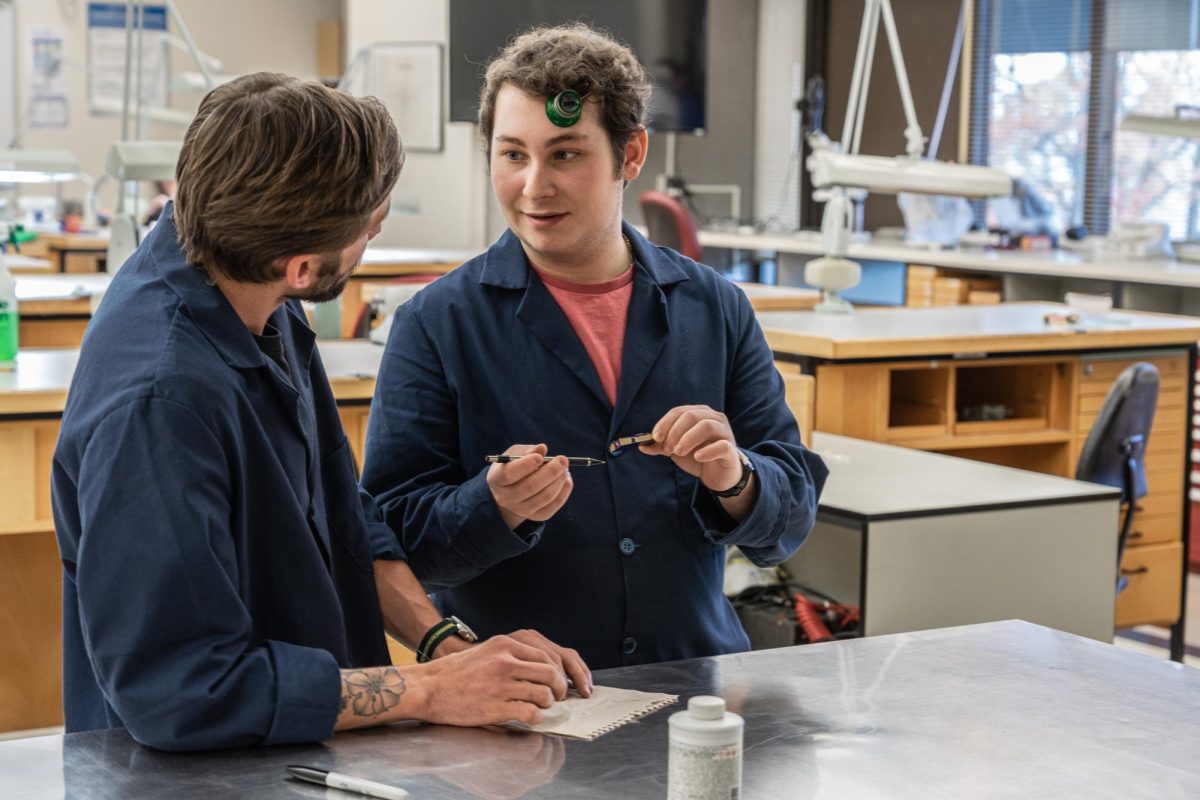
Every day, Rolex sells 38 million dollars of new mechanical watches, but there are less than half a dozen schools left in the United States that train people in watch repair. One of these few remaining schools is the Watch Technology Institute (WTI) at Seattle North College.
Though they used to have clock-making programs, the WTI now specializes exclusively in watchmaking. Watchmaking is a specialized discipline that focuses on the repair and maintenance of high-end mechanical watches, which are watches that use springs and gears to keep time. “For a lot of people, these expensive timepieces that they were paying for, there’s a lot of sentimental value attached to [them],” said Jimmy Lin, coordinator and instructor at the WTI. “As a watchmaker, being able to get the timepiece to a state where they can enjoy wearing it again, I found that really rewarding.”
Watchmaking is a precise craft, but no prior experience is needed to start learning at the WTI. “The curriculum is designed to train people with no background and get them to a state where they’re ready to enter the industry,” said Mr. Lin. The program, however, requires a large commitment; Mr. Lin said that “students are in the classroom approximately 36 hours a week, so it’s almost like having a full-time job.”
Those 36 hours of instruction don’t look like instruction at many traditional colleges. “There’s a lot of practical time at the bench. There’s a mix of what we call manufacturing, where they’re making components or they’re making tools from scratch, and then they get into the fundamentals of how to service a basic manual wind mechanical timepiece,” said Mr. Lin said.
Students’ hard work at the WTI pays off. According to the WTI’s website, about 87% of graduates end up with a job in watchmaking, an industry that is booming right now. “More and more watches each year … are floating out there, [that] will eventually need to be repaired and serviced,” Mr. Lin said.
However, the watchmaking industry has not been immune to change over time. Major changes have included the rise of cheaper electronic quartz-based watches and the introduction of smartwatches. However, the industry has not only withstood these shifts, but gotten stronger because of them. According to Mr. Lin, “We’re seeing a lot of demand for repair of mechanical timepieces, [because] quartz is at a more accessible price point, whereas mechanical is kind of in this luxury tier.”
The Watch Technology Institute has helped students navigate these changes. “Our roots date back to, depending on the source, either the late 1940s or the late 1950s, so prior to there actually being like a Seattle college system,” Mr. Lin said, “That’s something that we’re really proud of, just like the long history we’ve had with the city and by virtue of that, like we have graduates all over the country now in various levels of the industry.
If you are interested in learning more about the watchmaking program, visit the WTI’s website: https://northseattle.edu/programs/watch-technology-institute