
In the wake of major mainstream success such as Heated Rivalry (2025) , Heartstopper (2022), and Young Royals (2021) among many others, it would seem that society has made real progress when it comes to queer representation in media. However, the inclusion stops at male identities.
When asked to name a sapphic romance, often But I’m a Cheerleader (1999), The L Word (2004), or possibly Carol (2015) are thought of. While these pieces of media were trailblazers of their time, they are undeniably dated.
It is also impossible not to mention the underlying factor connecting them: whiteness. Across modern media, the default queer identity on screen is consistently reserved for white people. Although there have been more sapphic films and TV shows released in recent years, none have reached the same level of critical acclaim, production quality, or box office success as MLM (man loving man) media.
Cinema is one of the clearest places where we can see whose lives are deemed valuable and celebrated by society. Hollywood’s resistance to racial and ethnic diversity in casting and storytelling is already well documented, but it becomes even more amplified when it comes to queer narratives.
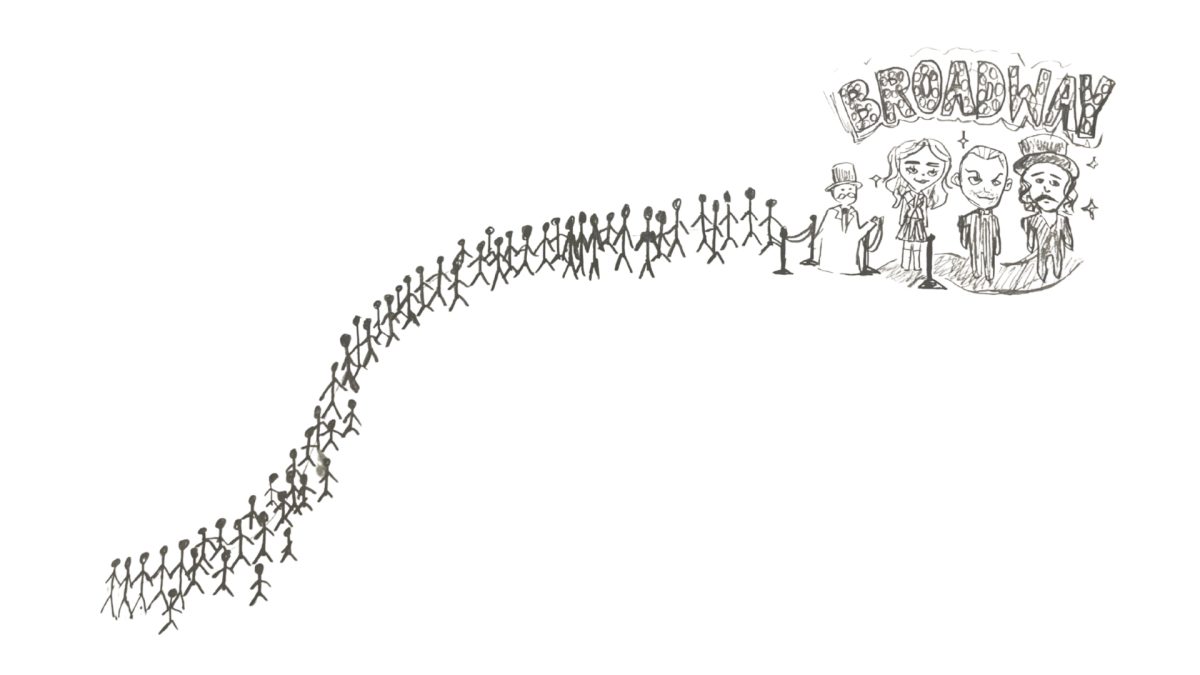
So why are there so many more MLM stories than WLW (woman loving woman) ones? All roads lead back to misogyny. Men are centered; women are expected to earn space. When one scours the internet (or Tubi) for WLW media, the results are often disappointing. The quality is poor or the film exists solely for the voyeuristic gaze of straight men (a perspective that fundamentally contrasts the sapphic gaze). On the rare occasion that the film is incredible, great production quality, compelling storytelling, and a diverse cast—it feels like a breakthrough. Has society finally done it? Have we created space for these stories to exist? Oh, wait. No. The film received no publicity, no marketing, and no views. Once again, it becomes a hidden gem excavated from Tubi.
Another recurring and damaging trope in recent television is that sapphic storylines are overwhelmingly somber and tragic. When was the last piece of queer media that didn’t end in tears, or with the death of at least one main character? Sapphic stories are pushed into fantasy worlds, seemingly implying either queer women are only interesting if they are otherworldly or that you are just as likely to encounter a lesbian vampire as you are an actual human lesbian.
As a result of low audience retention rates, it is also rare to find a sapphic show that isn’t canceled after one season. MLM shows, on the other hand, often have triple the amount of seasons. A perfect example of how society receives WLW media versus MLM media will be the reception of the Canadian network Crave’s upcoming sapphic softball series, Slo Pitch. While there is currently no set premiere date, the way this show is marketed and received will be telling following the precedent of Crave’s hit show Heated Rivalry. However, until queer women are afforded that space, the media will continue to tell them, quietly but persistently, that their stories matter less.