“We as humans have this tradition and desire to decorate our bodies that literally goes back to the time we [became] human,” Dr. Aaron Deter-Wolf, one of the world’s foremost researchers of ancient tattoos, said.
Tattooing has spanned global cultures for nearly all of human history. Its practice has varied greatly, using different materials, tools, techniques, and symbols between cultures. That desire to tattoo has been in many cultures since ancient times, and it still thrives today.
According to a recent study, tattooing is a $1.3 billion dollar industry in the United States alone, but tattooing as an art form has changed dramatically since its ancient beginnings. These changes are noticeable not only in techniques, but in the reasons for obtaining tattoos. “Today, we have this complete autonomy. We have this freedom to choose,” Dr. Deter-Wolf said. “For most of the history of tattooing, that has not been the case, so the marks that people were getting were not individually chosen. They’re things that are culturally mandated.”
Not only were the marks not individually chosen, but throughout most of history nearly every step of the tattoo process would have involved cultural symbology. “When someone is getting tattooed in the past … they’re getting tattooed with pigments that have cultural symbology. They’re getting tattooed by a person who’s important … in the community, they’re getting tattoos with tools that usually have some sort of important cultural symbology as well,” said Dr. Deter-Wolf.
However, colonization has left marks all across the world of tattooing, including on the tools that people use to tattoo, with steel needles replacing many indigenous techniques. In addition, many empires suppressed indigenous tattooing as a way to homogenize the people that they conquered and assimilate them into the imperial culture. Further, Dr. Deter-Wolf said, “Empires recontextualized tattooing as a way to … punish or dehumanize people… They took these indigenous traditions and sort of turned them into a way to mark criminals.”
This recontextualization has left an impact on the social acceptability of tattoos to this day, creating a stigma around tattoos in Western societies that has led to many tattoos being entirely omitted from bodies of research. In fact, the word stigma itself, comes from an Ancient Greek word relating to a mark made by a pointed instrument, or a tattoo.
Now, as these prejudices break down tattoos are becoming a more accepted medium for self expression. This new acceptance has also helped people to be able to recreate traditional tattooing practices that were replaced by steel needles and other modern tattooing tools. “All over the world there is a strong resurgence of traditions in which people are using [and] learning to use and to implement traditional pre-electric tools in their practices,” Dr. Deter-Wolf said.
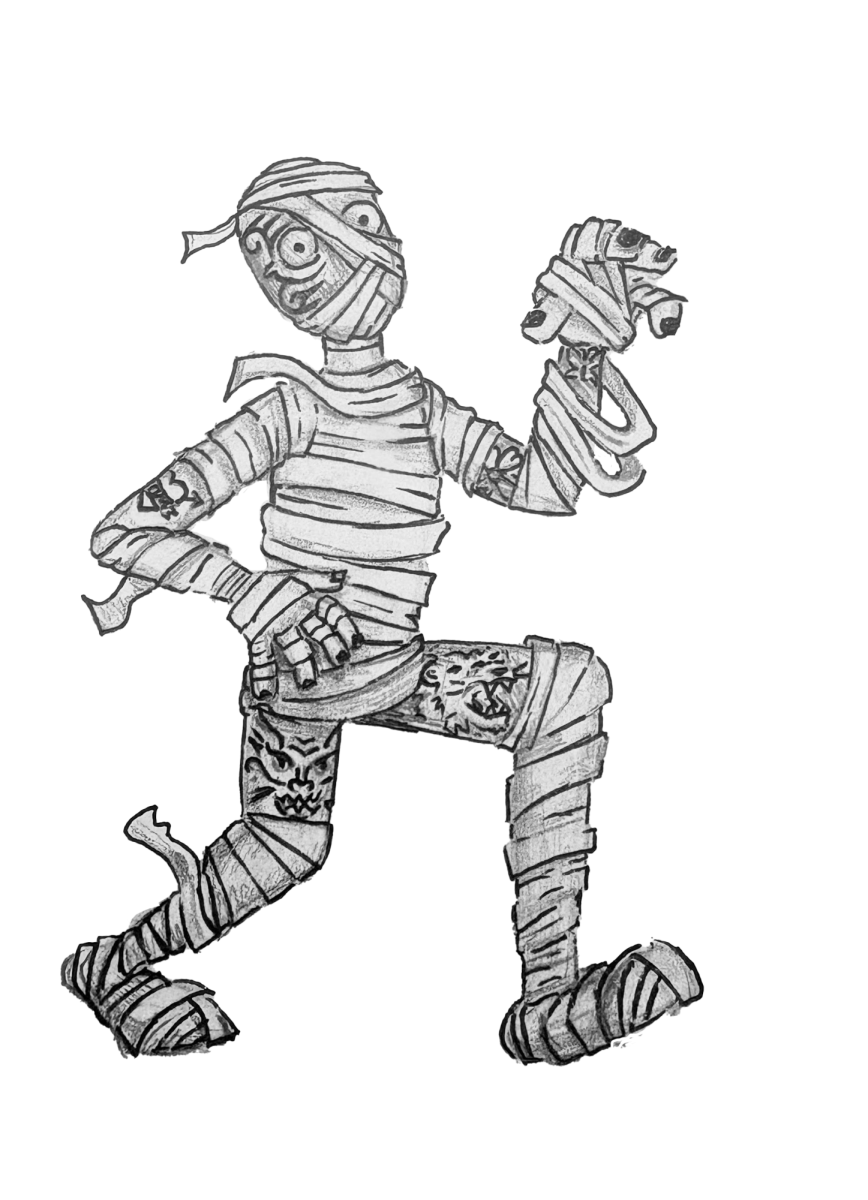
Graphic by: Camila Ceballos-Baliga