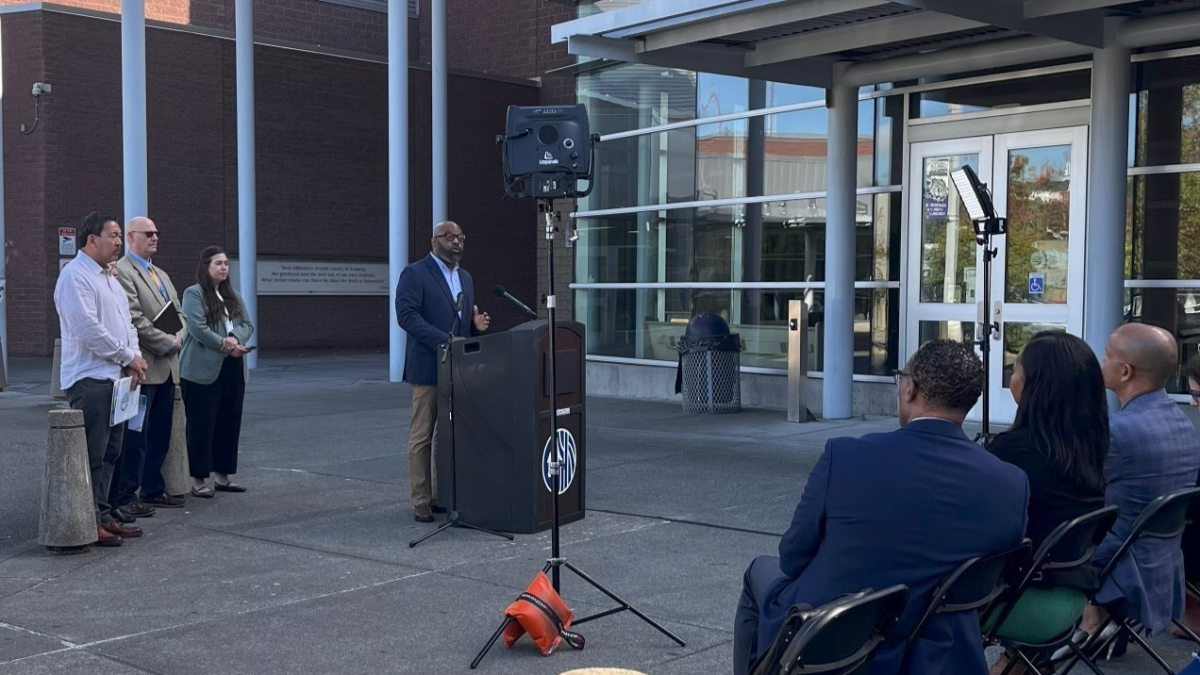
On January 19, the Martin Luther King Jr. Day annual workshops were held in Garfield High School’s very own classrooms, continuing the tradition of honoring MLK’s legacy through education and action. In room 217, Washington’s NAACP Youth Council hosted a workshop centered on youth leadership, anti-racist education, and the role students play in shaping just and inclusive school communities.
The event was designed as an interactive, student centered space of engagement. It began with introductions from members of the NAACP Youth Council, followed by a land and labor acknowledgment and the establishment of community guidelines to ensure a respectful and supportive environment. Participants then engaged in an icebreaker discussion that asked two guiding questions: what they had seen regarding anti-racism in their school and community, and what changes they wanted to see moving forward. These questions encouraged students to reflect on their own experiences and set the tone for open and meaningful conversations throughout the workshop.
Students were then introduced to the mission and history of the Washington NAACP Youth Council. The council described its work as creating authentic partnerships to promote healing-centered, culturally responsive practices in order to build positive school climates and eliminate racial and systemic trauma, white supremacy, and anti-Blackness.
Workshop leaders also shared the history of the organization, explaining that the Washington NAACP Youth Council is a BIPOC youth-led group made up of students from across the state who work for racial justice within Washington’s public education system. Members spoke about the importance of youth voices in decision-making spaces, noting that students of color are often dismissed or tokenized. The council’s work focuses on ensuring young people are able to speak their truth and advocate for changes that will benefit both current and future students.
Throughout the workshop, the council leaders emphasized that honoring MLK’s legacy requires sustained participation and collective effort, both within and beyond the classroom. During the small-group activity, students were asked to envision their “dream” educational environment. The students were encouraged to reflect on and look deeper into their everyday realities in their learning environments. The discussion prompted students to discuss the micro-aggressions they witness in their classrooms and how they believe change could be enacted in their communities. As students became more comfortable sharing their lived experience, it became clear that the experiences of students in all schools within Seattle Public Schools (SPS) face similar systemic challenges of not feeling comfortable with student dynamics nor feeling fully heard by their school’s faculty and SPS. The following discussion prompt was for the students to define clear goals to better their own and their peer’s education in 2026. The Youth Council facilitated a conversation, nudging the students to evaluate what justice could realistically look like across SPS, how an anti-racist paths can be built, and the values students deemed essential to support their mental health. These conversations were later brought back to the larger group, where participants discussed what actions they were willing to take in their own communities to advocate for anti-racism and support the Youth Council’s goals of holistically bettering the lives of the youth in SPS and greater communities across Washington.