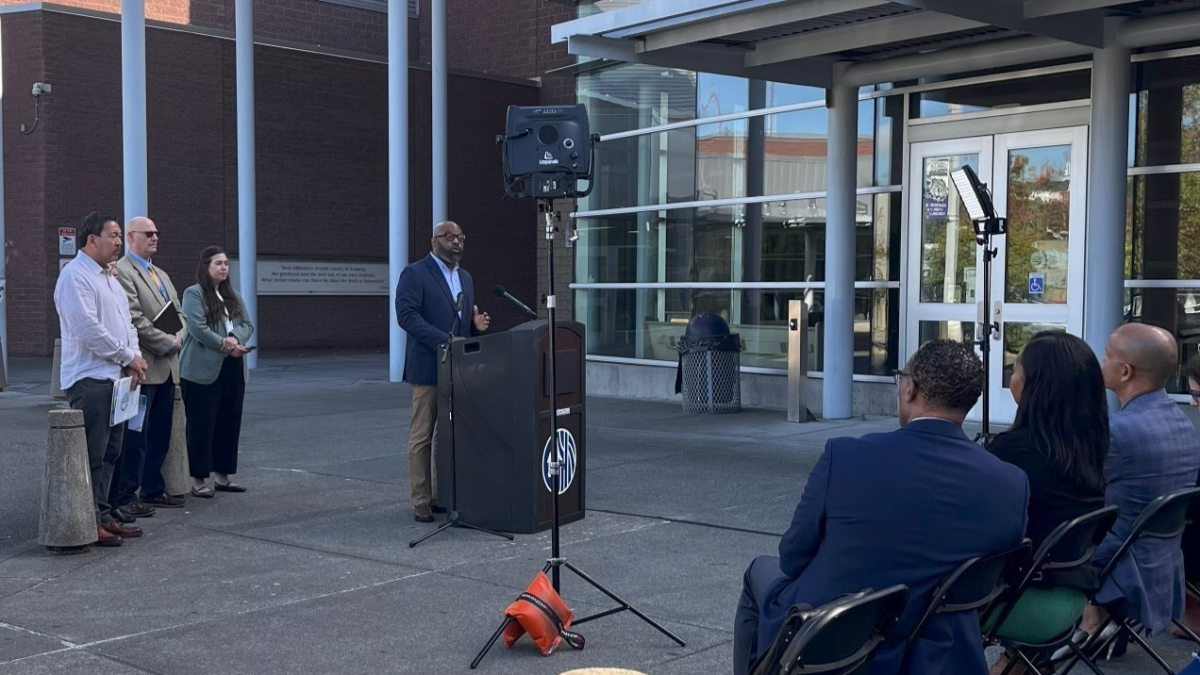


For the 2025-26 school year, the Garfield Student Senate is back after its introduction early last year. The Student Senate aims to represent all of Garfield and is a prerequisite for those planning to run for a leadership position in the associated student body (ASB). The Senate will be made of at least ten people per grade. “The focus is to create more spaces where a broader group of the student body can have their voice heard and…some formal power or recognition within school decision making,” Jamie Rees, an academic intervention specialist at Garfield and facilitator of the Student Senate, said. Currently the Student Senate lacks any official power, but Rees hopes that they can eventually vote at administrative meetings within the school.
As the representatives of the entire school, Dr. Hart and administrative staff will be able to trust members of the Student Senate on key issues where they require student input. Zachary Dvorkin, a member of Garfield’s ASB, added that ASB “is like 30 individuals in total… we’re not representative of the whole student body, because not everyone runs, and generally, the most popular people win.” The Student Senate is not based on popularity but instead gives seats to those who volunteer. As a separate leadership body from ASB, the Student Senate will be able to provide input from a larger portion of Garfield students to ASB on ways to improve assemblies, dances, and other school-wide events.
The Senate will be led by Mr. Rees, School president Eric Wakefield, School vice president Marni Farrell-Sheffer, and ASB member Zachary Dvorkin. “[We’ll] be there to schedule meetings and make sure there’s an agenda sent out,” Dvorkin said. “We, to the best of our ability, are going to be nonparticipants… we are open to addressing whatever problems the Senate identifies as the most important things,” Rees added. By having its leaders step back from participating, the Student Senate will be able to remain independent from ASB and provide effective feedback regarding school events.
While Rees aimed to take a nonparticipant role, he identified some possible problems that the Senate may target. “How to hold students accountable to being in class on time” made the top of his list, as well as managing bathroom vandalism. These key issues have an effect on every student in the school as many school bathrooms are shut down regularly, and the funds to fix them are beginning to come out of the prom budget.
“If we can provide students with preparation when they’re freshman and sophomores they might be more likely to join The Messenger, become an editor, or even join ASB. Providing more training and exposing more people to leadership opportunities…that’s my hope.” Rees said.